Submissions are now CLOSED for the 2026 Priscila Uppal Memorial Award for Poetry
Contest Dates
March 1st to May 1st 2026
Short List and Winners will be announced in July 2026.
Thank you to everyone who submitted work to the 2026 Priscila Uppal Memorial Award at Canthius. The submission period officially closed on 1 May 2026.
We received 117 submissions this year and are deeply grateful for the care, creativity, and generosity reflected in the work sent to us. Thank you as well to everyone who helped spread the word about the award!!
The submissions are now with this year’s judges for review. We will be announcing a shortlist in early July and the winner by the end of July! Stay tuned for exciting poetry, explorations of feminist literature, and celebrations of life!
Projects
View the poetry, prose, games, visual art, and more published as part of Canthius Journal’s 2021 Pleasures project.
I pushed it to the limit a lot of the time. I have never been the type to recast things in an ominous light. I wanted to keep that [feeling] in the book—that we can ignore things and still feel the pressures of it.
I don’t necessarily think of the poem as being imposing. I write in the tradition of courage.
When I get through these uncomfortable times of not writing, I usually realize that I needed the space, and that not writing was not necessarily “unproductive” or empty space, but instead it is usually a time where ideas are percolating in weird and wonderful ways without my being fully aware.
Zehra Naqvi’s debut collection The Knot of My Tongue explores personal and generational calamities: domestic violence, a family’s displacement during the Partition, the Battle of Karbala. Writing about or within unspeakable violence is no simple task for a poet.
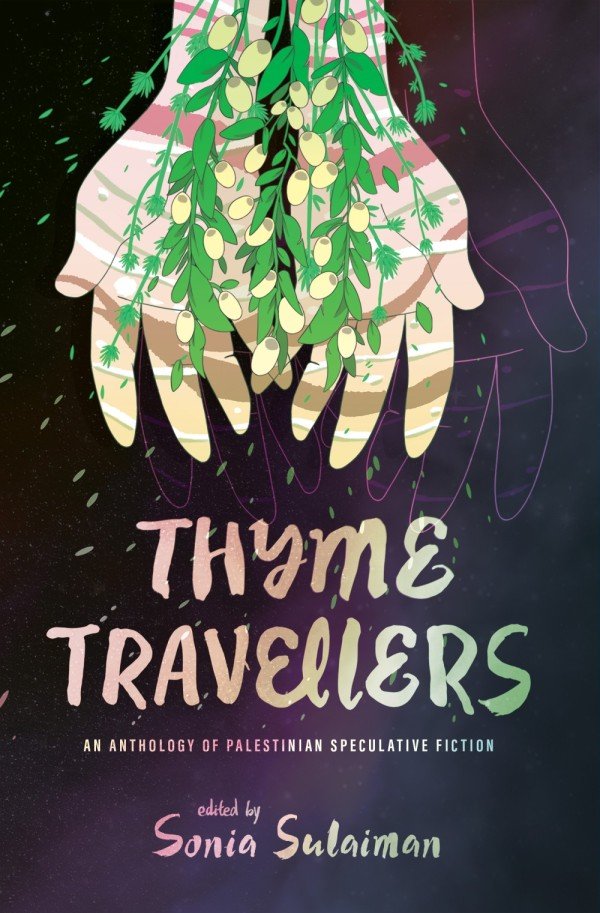
Thyme Travellers: An Anthology of Palestinian Speculative Fiction collects fourteen stories by new and established writers from the Palestinian diaspora. Edited by Sonia Sulaiman, these stories imagine new worlds and confront the reality of our own. Individually, these stories are thought-provoking and sincere. Together, they beautifully explore Palestinian identity and resistance, and offer readers a chance to reflect upon the present moment and what we want the future to look like.
The Coin follows a wealthy Palestinian woman who takes on a position as a teacher at an all-boys school in New York City. She is tastefully extravagant, chaotically in crisis, not a particularly good or moral person, and one of the most fascinating characters to emerge in contemporary fiction.