Revelations? Revolution? Revolution(!): Review of Hajer Mirwali’s Revolutions
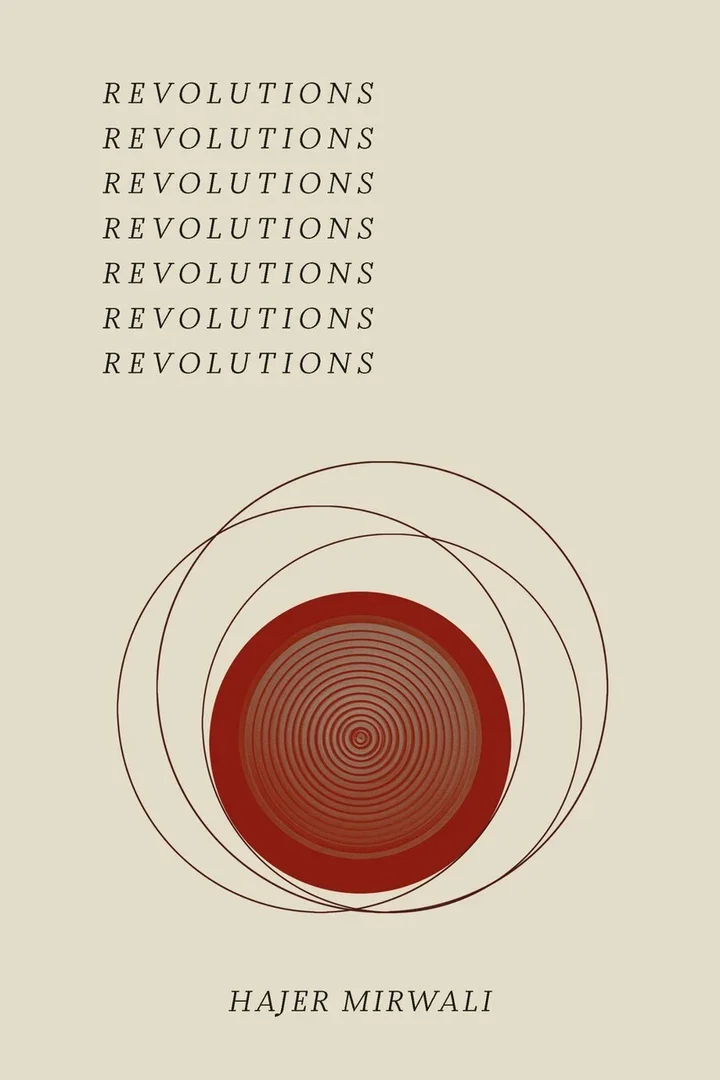
Hajer Mirwali, Revolutions
Talonbooks, 2025. $18.95 CAD
Order a copy from Talonbooks
Before I first read Hajer Mirwali’s Revolutions, I leaned over to tell a friend the title of what I’m planning to read. I tried to remember and flub in accuracy: Revelations? Revolution? Revolution(!) After spending devoted time with this collection of poems and sequences, my revolving door of misnomers feels quite fitting with the book’s multiplicitous invitations and rotations in meaning. In her experimental poetry collection Hajer Mirwali, a Palestinian and Iraqi writer living in Tkarón:to, explores how young Arab women navigate self-making and self-erasure amidst cultural, religious communities and their histories, traumas, and traditions. Mirwali’s text asks how one experiences and honours the role of woman and girl, mother and daughter. How does one honour themselves, their pleasures, and desires when they persistently run the risk of being deemed shameful for it? How do Palestinian individuals experience personal and intergenerational abstraction from a homeland ongoingly experiencing genocide and diasporic trauma? In form, Mirwali experiments with redaction, the personal lyric voice, repetition, scattered white space, and glimpses of concrete poetry. In conceptual meaning, Mirwali’s poetry is a cycling search for internal revelations. It is a full turning over of one’s past, memories, and the stories shared between women and girls. It is a thousand small sociopolitical revolutions, imagining expansive realities for young women, their mothers, and their broader communities.
A great beauty in Mirwali’s poetic praxis is her rhizomatic mode of citation. She explicitly invokes the writing of Mahmoud Darwish, Hayan Charara, Ladan Osman, Layli Long Soldier, Nicole Brossard, and most notably, Palestinian multimedia artist, Mona Hatoum. Much of Revolutions is in direct dialogue with Hatoum’s artwork + and -. This artwork is a dual-bladed machine sitting in a circular bed of sand. While one blade smooths the sand, the other always follows and rakes it into disturbed grooves—this cycle goes on forever. Mirwali writes, “Does a circle mean you can return? / Does a circle mean you can’t leave?” (12). Throughout the collection, Mirwali reads Muslim and Arab diasporic womanhood as a metaphorical palimpsest with Hatoum’s artwork. In some moments, the poetic speaker is the sand, smoothing themselves in response to socio-cultural conditions, only to be stirred once again by personal affect, outrage, grief, or deep wanting. In some moments, the speaker is identified with the blade. Mirwali’s poetic subject frames a mother-daughter relationship in the metaphor of Mona Hatoum’s artwork:
In 1994 Mama gave birth to me in Amman on
her way from Baghdad to Richmond Hill and
Mona with wood sand metal electric motor
transported us to the first home we were
exiled from. Two daughters of a revolutionary
split. Two mothers of a contracting uterus
waiting to be Palestinian again (20)
In its varied formal experiments, Revolutions always thematically returns to this metaphor of smooth and disturbed sand. This always-shifting metaphor is the stage for the poet’s deft ethical work—speaking to Palestinian loss and resilience, Arab women’s struggles and everyday loving and living, being in alignment with community and falling painfully out of it. Mirwali skillfully communicates the interlocking tensions of these identities while always respecting the historical, religious, and cultural knowledge and experiences around her.
In between the ever-returning metaphors, Mirwali injects her poetic sequences with language and voice straight from her surroundings. For example, 3aib is a concept that echoes throughout this collection, translated from the Arabic Texting Code to mean shame. Mirwali doesn’t translate this term into the full English of the surrounding texts, instead she shows us what it means: “we rolled 3aib up smoked it got so fucking 3aib holy 3aib it was 3aib everything” (2). This potent word is demonstrated to have the ability to both infiltrate experience and the very signifying identity of young women: “dancing and slutty and embarrassing and laughing and armpit and / […] lipstick and not being sad enough and being sad 3aib cried in the car talking / about her mom the rest of us cried hearing her crying” (Mirwali 2). Here, girls can simultaneously grieve the weight of 3aib and gather around the shared experience of being subject to it. Mirwali’s collection is just that, a sort of meeting place. Again, Mirwali authors this citational love letter to the women in her community by protecting their identity. On many occasions, the women around her polyvocally speak under the name “xxxxxxx” (Mirwali 2). In this redaction there is both care-full respect and an opening for readers to catch glimpses of themselves in this figure.
In some of my favourite formal moments in the book, Mirwali’s poetry takes up familiar traditions of postmodern feminist poetry. For instance, in “Hourglass Procedure,” Mirwali’s use of repetition in the line, “sand and sad and sound and send and gland and glad” (Mirwali 58) echoes the internally alliterative style of Lola Lemire Tostevin’s Gyno Text (1983). In another standout technical moment, Mirwali authors a love letter to anastrophic experimentation. Her poetic sequence, “Cycle Generator” takes the arrangement of a line and cycles the words into a new order. For example,
pleasure ▬ of our bodies ▬ with wait to return
return pleasure of our ▬ bodies with ▬ to wait. (Mirwali 56)
Here, the redacted words chase the given ones. Meaning is fragmented together, and yet, in this fragmented merry-go-round, the elusive relationship of the nouns offers potential meanings. The words “pleasure” and “bodies” never neighbour each other. Instead, they rotate in tension, chasing each other, desiring reunion.
Mirwali leaves readers with a message: “we only spin in circles / until we learn / how to turn in” (112). I think this is true across many varying intersectional experiences, however, Mirwali implicates reader in exactly what it means for Arab women living in their familial, gendered, and cultural contexts. Inspired by Mirwali’s poetry, it seems to me that there are small revelations in the daily revolutions of our living. Constant invitations to notice the relations around us, to understand them, honour them, and then think about what it means socially and politically to honour ourselves. Wake, notice your body, call your mom, feel like a daughter, do the work, feel like yourself, sundown, repeat.
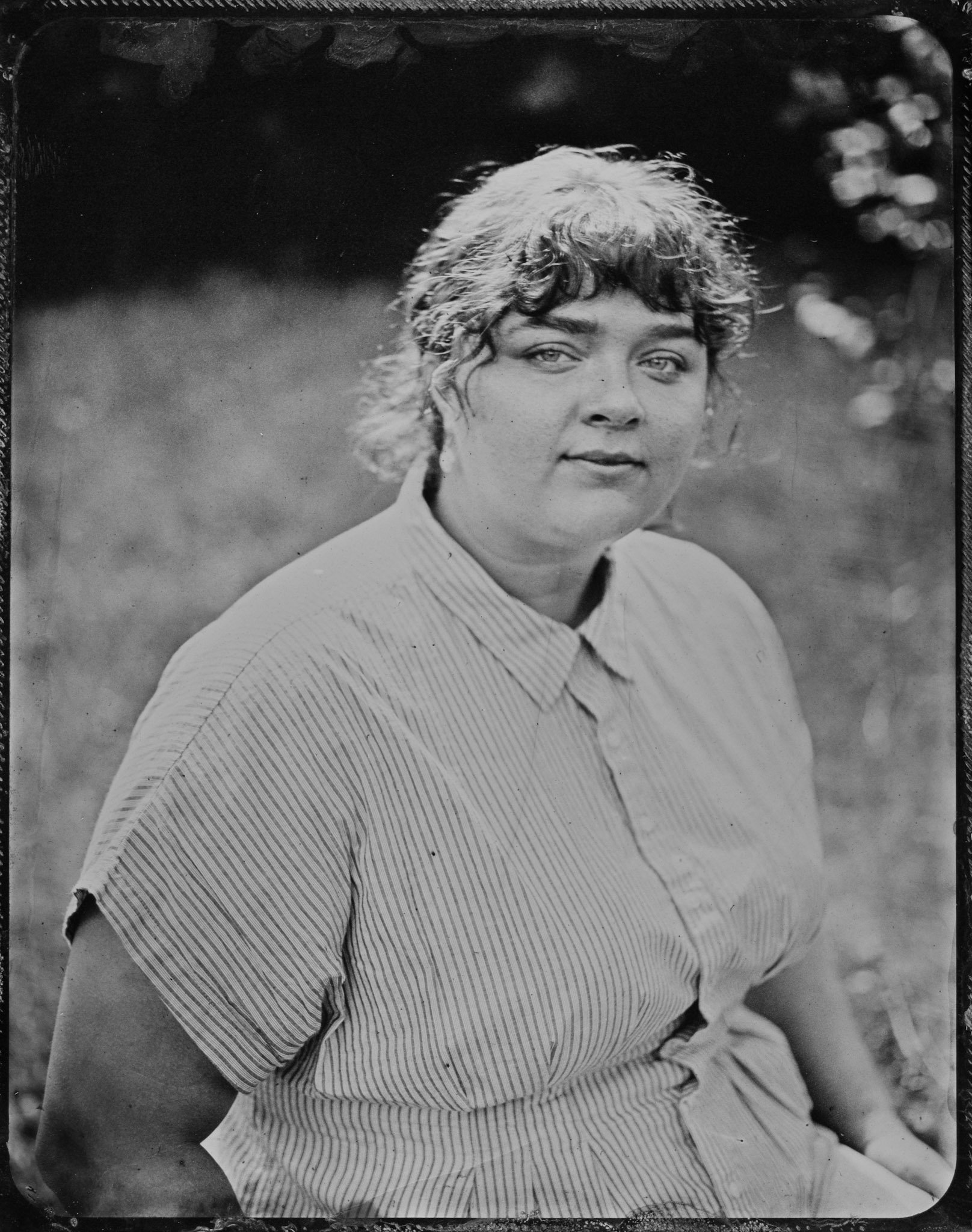
Shannon Brown is a writer and PhD Candidate at Dalhousie University. They study Research-Creation through feminist and queer theory. Originally from the prairie city of amiskwaciwâskahikan (Edmonton), they currently live by the water in Kjipuktuk (Halifax). Their poetic and creative non-fictional works appear in long con magazine, Fruitslice: A Queer Quarterly, and Circe Magazine.