
Barzakh : Where hope and grief meet by Barâa Arar
سَحَر
Sahar
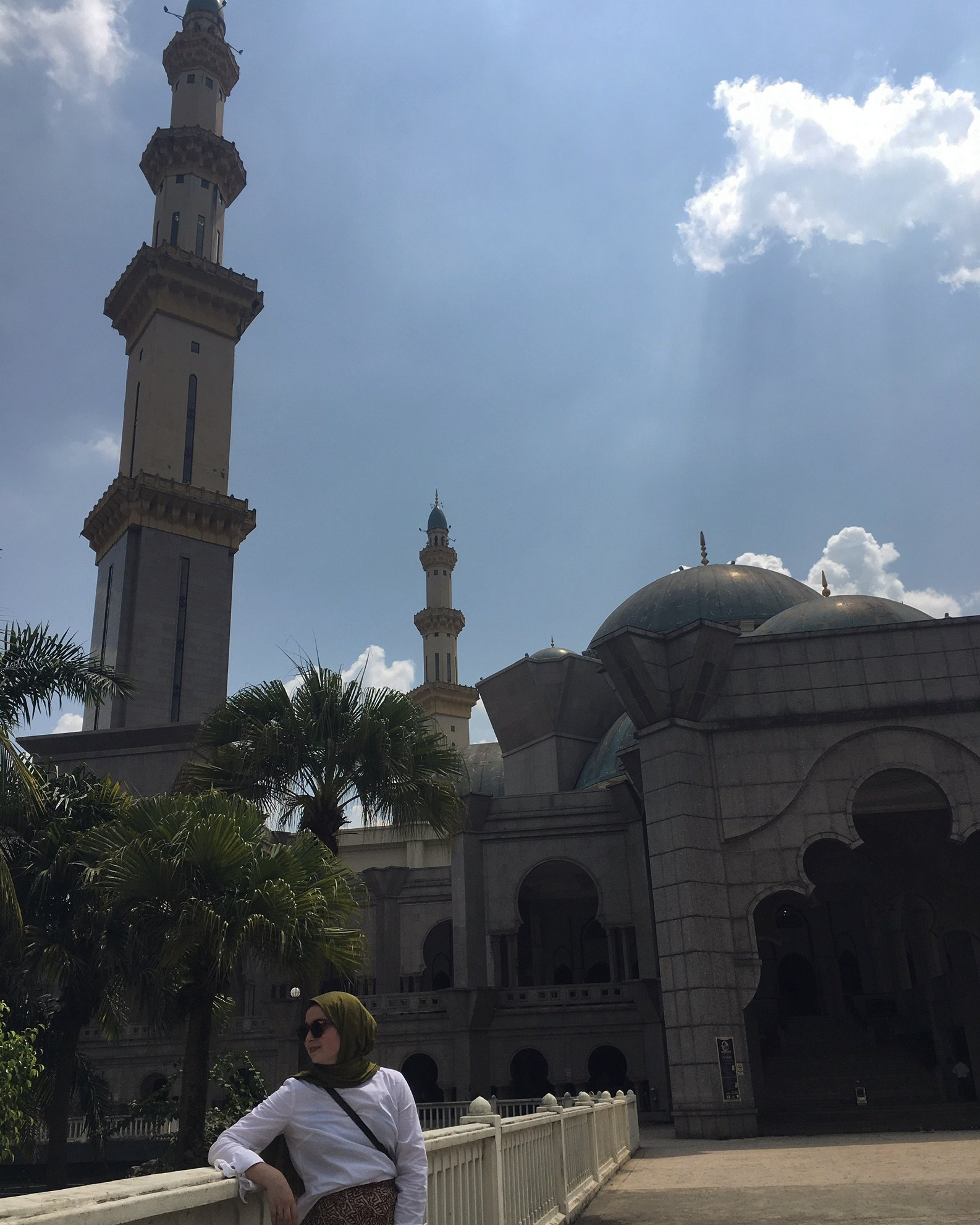
When I get the news, I leave our rental kampung house and walk the narrow road bisecting the Langkawi floodplains. The tall grasses reach my hips and to my right, a plump water buffalo descends into her basin like a submarine. The pond gurgles.
Overhead, the electric wires are droopy, lethargic from the growing heat of the dawn. The water buffalo resurfaces with a growl, her slate skin slick with mud. Her needs are modest and attainable: with just a bath, she appears revived. Something about witnessing her simple existence releases six weeks of pent-up tears from my eyes, a hot spring erupting from the fracture deep inside me. My tears taste metallic. I wipe them away with the back of my hand. I can’t believe that I am crying. Finally, crying.
I am on an archipelago on the western coast of Malaysia, the furthest place I could imagine from home. My friend Paul is dead, and at last, I am able to feel.
شَفَق
Shafaq
On January 11, 2019, six weeks before I beheld the water buffalo’s bath in the Malaysian marsh, I was stuck on an OC Transpo bus in Ottawa’s dedicated rapid transit corridor. A double-decker bus just ahead of mine had veered off the road into a snowbank on the shoulder, and crashed into the steel canopy of the bus shelter at Westboro Station. My view of the crash site was limited as the station was hewn from the bedrock and the corridor lined with high concrete walls. The other passengers and I waited impatiently, assuming the delay was just another inconvenience on our daily commutes home. But then we heard sirens flood the scene and knew that this was more than a routine delay. I checked Twitter and found gruesome images from the crash site only metres away.
We were trapped on the bus—safe but afraid—for what felt like hours, until emergency services diverted us around the site of the crash. Later, I learned the accident had killed three people and left twenty-three others with life-altering injuries.
I arrived home much later than I expected, exhausted and disoriented. The last thing on my mind was how I was supposed to submit one of my graduate school applications that afternoon. It was the last day to apply. When I finally logged onto my computer, I found that the applications portal had closed. I couldn’t submit the application I had been working on for six months; I had officially missed the deadline. I couldn’t breathe. I started to scream. My legs gave up from underneath me and I collapsed on the floor of my childhood bedroom.
The world went quiet. I kept my eyes shut. I am not sure how many seconds or minutes passed like that. When I finally pulled myself up and opened my eyes, I felt out of place. The hardwood floor was cold beneath me. I did not recognize the bedroom of my adolescence, with its mauve walls and IKEA bedframe. It was as if my scream had ripped me away from earth itself.
It felt like I was back in the Crazy Kitchen from childhood trips to Ottawa’s Science and Technology Museum. The Crazy Kitchen looks like a regular kitchen, but angled floors, unusual proportions, and wonky visual cues fool your perception. As a child, it was a dizzying experience—something familiar and yet unfamiliar at the same time. My world felt suddenly off-kilter and I could no longer trust it. Yes, my own bedroom had turned into a kind of Crazy Kitchen.
As the confusion faded, I tried to ground myself in the present and understand what I was feeling. I tried to locate my emotions in my body, but I couldn’t find them. There was no sadness, no anger. No sensation. My body and mind were disconnected. I started to panic. I would understand later that it was at this moment that my body had gone numb to experiencing emotions altogether. It was my mind’s attempt to protect me from any further pain, disappointment, and tragedy.
*
Later that night, every time I closed my eyes to sleep, I saw my family’s cottage. I had just returned from a short trip with my friends. The trip was restful. The log cabin had been perfectly cozy and idyllic, but behind my eyelids, the cottage was engulfed in flames. In my mind, all I heard was a voice chanting: your fault, your fault, your fault. Was my family’s cottage actually on fire? How else could the flames be so vivid? I opened my eyes to try to escape the visual, but as soon as I tried to fall asleep, the nightmarish scene played behind my eyelids again. I was agitated and unable to return to a state of calm. And though I was accustomed to crying during such moments of sadness and fear, this time, the tears did not come.
At some point, my mother got into bed with me, but even with her comforting weight beside me, I was not able to feel grounded, to feel rooted to the earth. I would learn later that the medical term for what I was experiencing was disassociation.
إِسْفَار
Isfār
Our rental in Langkawi has a palm roof and no interior walls except for the ones enclosing the washroom I share with three friends. Lace curtains cover the perpetually open windows and billow in the fleeting breeze of dusk. At night, the rustling bamboo plants in the veranda lull us to sleep.
The morning of Paul’s death, I wake before my alarm, and for a few moments I am in a sort of fugue state, between sleep and consciousness. It’s not just the jet lag that is disturbing my sleep. I have a gnawing sense that something bad has happened. I look around the house and find my friends still asleep, their sheets bunched up at their feet from another humid night. The sky is petroleum-coloured beyond the open shutters. I reach for my phone to check the time and without thinking much about it, I tap on a push notification from Twitter. It is a direct message from a journalist: “Do you have a minute to talk about Paul Dewar’s passing?”
My mouth goes dry. How could this journalist be asking me to comment on the death of a person who is still alive? I text my father who is in Ottawa and a friend of Paul’s. I am sure he will say this is a mistake. But I don’t need to wait for my father’s response. I find a message from a mutual friend that reads: “Last night, surrounded by his family, Paul passed away quietly almost one year after his diagnosis. The media has been circling like vultures and we have sent them the pre-written, embargoed press releases…”
I stop reading and go to the washroom. I make wudu in the dark even though it is too early to pray fajr. The cool water drips down my face, my neck, my chest. From the clothing line, I grab a headscarf and the dress I aired overnight, throw them on, and run out of the house in whatever sandals are at the door.
Outside, I seek some comfort in the dim light. Daybreak, in Arabic, is known as isfār. It is a word that can also be used as a verb to mean the act of enlightenment. To be in light. English does not have a precise word for this transitional time of the morning. I am a descendant of desert people who refer to each phase of the day and night and its accompanying changes of light and shadow with extraordinary detail. For them, time is told not by clocks but by how the white thread of dawn extracts itself from the black thread of night.
I sit at a picnic table and look at a picture of Paul and I on my phone. It was taken shortly after he went public with his diagnosis of a grade 4 glioblastoma. In the picture, we are standing in the National Arts Centre at the launch party for his newly established organization, Youth Action Now. I’m wearing a purple organza hijab and he is wearing a fedora. I am smiling widely. I had just given a speech about the importance of youth activism and solidarity, telling a room full of politicians and donors that, in grade five, I collected signatures from my fellow students to reinstate Hot Dog Day at school even though I myself couldn’t eat the hot dogs.
We both knew that the cancer was terminal then, but in that photo, I pretended that I didn’t. I couldn’t accept such cruelty.
Paul Dewar was not only a politician, an advocate for social justice, and a teacher, but also a beloved family friend. He stuck it out with people, for people. As the New Democratic Party’s foreign affairs critic, he supported my family through a painful time in my childhood. In 2002, my father, Maher Arar, a Canadian citizen, had been imprisoned in Syria in a case of "extraordinary rendition." I was only five years old when my mother began an arduous public campaign for his release. After my father was safely returned to Canada, Paul, alongside other human rights advocates, called for a public inquiry to clear my father’s name. And so, it felt like Paul was a part of my life from the very beginning. If it were not for Paul and voices like his, I may not have grown up with my father.
As a teenager, I felt I had escaped my early childhood experiences unscathed. I had always tried to be a “normal” girl, not the girl whose father had been falsely accused of terrorism. But now I was no longer sure that I was unscathed after all; how long had I been holding on to complicated feelings of injustice, unfairness and good people being ripped away from my life suddenly and without notice? How long had I been holding my breath like this? How long had my body been bracing for something to go horribly wrong, suddenly and inexplicably? Maybe I'd been waiting for the other shoe to drop since I was a five-year-old girl.
When I finally look up from my phone, I find the sky has turned lapis, and in the near distance, the mountains look like shadows of themselves. Just yesterday, my friends and I took a cable car to the summit of those very mountains. High above the tree canopy, at the very top of Gunung Mat Chinchang, I felt large and imposing. Red rooftops interrupted the lush rainforest and sailboats moved across water looking as small as seagulls.
Today—a day after the news of Paul’s passing—I sit at the picnic table and look down at the crumbly red soil that has coated my feet. Then I gaze up at the mountains and see them clearly for what they are: majestic formations that help us maintain our gravitational balance.
ظُلم
Dhulm
On February 14, 2018, Paul underwent a delicate and risky surgery to remove his brain tumour. That same day, at a high school in Florida, a 19-year-old man with a concealed AR-15-style semi-automatic rifle and multiple magazines fired 139 shots that killed fourteen students and three teachers. The Parkland High School shooting remains the deadliest mass shooting at a high school in the history of the United States of America.
Paul awoke from his surgery to news of this tragedy. He later said that when he heard the news about the shooting, he felt overwhelming despair. And yet, he continued to follow the media coverage of the story and eventually became inspired by the student survivors at the school. He was so moved that, in the midst of their grief, they were mobilizing to fight for gun control. In Arabic, the word for darkness—dhalam—and the word for injustice—dhulm—share a tri-patriate root. It is understood that injustice is a force that not only brings darkness to others, but also veils someone’s own heart from light.
*
When Paul launched his grassroots legacy initiative, Youth Action Now, he asked me to join its first steering committee. I happily agreed. I was honoured to work with him, his family, and to give back to my community.
*
My dissociation persisted for many weeks after the bus crash. I had experienced episodes of dissociation before, but they usually lasted minutes or mere seconds. Those episodes were not any scarier or longer than a sense of deja-vu. But now I had been going to bed and waking up in the same numb state day after day; it felt like I was trapped in a two-dimensional existence. I described it to a friend as feeling not like myself, but rather like a photocopy of myself.
Concerned by the persistence of my symptoms, I went to see my family doctor. At the appointment, she answered the question that I had not dared ask out loud: “Don’t worry, you’re not going crazy.”
“It feels like I am going crazy,” I returned.
“If you were actually going crazy, you wouldn’t know you were.”
I nodded, but I didn’t believe her.
“Try to be in your body,” she advised. “An overactive mind means an underactive body.” I took the stairs on my way out of the clinic. I was breathless, but nothing else changed.
On my family doctor’s advice, I went to a psychotherapy clinic in my neighbourhood for an initial intake.
“Were you a gifted kid?” the psychologist asked.
“I failed the entry test for the gifted program.”
“Well,” she said, holding back a smile. “You didn’t fail.” With this one word, she had figured me out. In invoking the word failure, I had helped her confirm who she thought I was.
Her dog looked up at me from the puddle of his coat, as if he too knew I had screwed up. She said she was surprised I hadn’t ended up in her office earlier. Did I bore her with my textbook symptoms? In her mind, was I the classic example of the oldest daughter of immigrant parents: high-functioning, anxious, and overly sensitive to the needs of others?
فَلَق
Falaq
A common method to quell anxiety is the 5-4-3-2-1 technique. It’s a mindfulness exercise that is supposed to help ground a person in the present, away and out of their overwhelming, anxious thoughts. It works like this: the person must acknowledge five things they can see, four things they can touch, three things they can hear, two things they can smell, and one thing they can taste.
Usually when I am experiencing panic, I find it nearly impossible to employ this or any other grounding technique. My panic usually balloons faster than I can summon an exercise to redirect it. However, my entire trip to Malaysia is a kind of around-the-clock immersion in the 5-4-3-2-1 mindfulness exercise. In any new setting, it is impossible to ignore the novel sights and sounds.
And so, I am at peace when I sit on the veranda of our rental, the tall bamboo shoots forming a veil of privacy so I can enjoy the breeze in my hair. I hear the athan from Masjid Kampung Belak and I feel the vibrations of the muathin’s voice between my own ribs as if my bones themselves are thrumming. I feed stingrays at a fish farm by hand and feel no fear, noting instead how slimy and strange their skin feels. I drink mango juice at Durian Perangin Waterfall, the condensation from the cold can dripping down to my elbows.
These are the sounds, tastes, and textures of how the world returns to me and how I return to it. These are the tiny moments of joy, safety, and connection, sometimes referred to as glimmers. They reassure me that I am going to be okay. That I already am ok.
I should clarify that I was not miraculously cured of my disassociation by a trip to Malaysia. Rather, what I mean to say is that I began the flow back into myself, out of the copy and into the body, during those moments, or glimmers. I had not travelled to Southeast Asia before and, while Malaysia is a majority-Muslim country, I found many aspects of the culture new to me. However, despite it being a foreign country I did not feel out of place. I felt welcomed and safe, and at times, even privileged. I received free upgrades and was allowed to skip to the front of the line—perks that I had previously only seen my white friends enjoy in Canada. I was conscious that this treatment was likely shaped by a variety of factors, including my light skin, purchasing power, and Canadian-English accent. Still, I would be lying if I said it didn’t feel good to experience that kind of social capital firsthand.
After my return to Canada, I began to see a therapist regularly. She tried to help me understand what I was going through. She told me: “Anxiety is the anticipation of future pain.” But I learned that doesn’t mean that anxiety prepares us for actual pain. Nothing prepares us for actual pain.
My journey out of my dissociation didn’t occur in one identifiable moment. It was a sum of multiple moments. My mind and body finding each other again: sometimes I was rooting, sometimes straining toward the light, sometimes sinking, sometimes surfacing. I was in a kind of liminal space and I let myself be.
صُبْح
Subh
In Langkawi, the day before Paul dies, we set off for our tour of the Kilim Geoforest early in the morning. A blue tarp is fixed to the top of the speedboat as a makeshift canopy to shield us from the blinding white sun. We travel carefully through the narrow straits of the mangrove swamps. Macaques run out from deep in the mangrove forest, jump over our heads from tree to tree, and hang from the very edge of the branches, threatening to hop onboard. Eagles swoop down from the sky, nose diving with precision, hungry for what is waiting for them just under the water: mud crabs and snakes and mudskippers.
Mangroves grow in coastal brackish water of tropical regions. Their complex underwater root systems allow them to live in harsh conditions: in heat, in mud, and often with very little oxygen. Mangrove roots cling to the sea floor. Their roots are strong, like arms.
We dock at a pier for lunch where we eat grilled fish off paper plates and feed stingrays. I do not know it then but fourteen thousand kilometres away, in the early morning, Paul is taking his last breaths.
In the afternoon, our speedboat navigates out of the mangrove marsh and into the open sea. I feel the exact moment when the shift from marsh to open sea happens, how the boat suddenly skips with such lightness. The salt in the sea makes us buoyant and the briny air is delicious on our tongues. It feels like we are flying.
This crossing reminds me of the following verses from The Quran:
مَرَجَ ٱلْبَحْرَيْنِ يَلْتَقِيَانِ ١٩
بَيْنَهُمَا بَرْزَخٌ لَّا يَبْغِيَانِ ٢٠
“He released the two bodies of [fresh and salt] water. They meet,/ yet there is a barrier between them they do not cross” (Quran 55: 19-20).
The Arabic word barzakh, translated here as ‘barrier’ describes the visible separation between two bodies of water with different salinities, between wetlands and the sea, or between rivers and the ocean. The word barzakh is also used to refer to the line that separates a shadow from a ray of sun, without itself being light or dark. It is what separates and divides but also what brings together two distinct things without becoming either of them. In Islamic theology, barzakh refers to an in-between place between death and resurrection. I think to myself: barzakh is exactly the type of in-between place where mangroves grow.
That day, our tour guide takes a particular interest in my friends and I. He insists on taking photos of us at every stop of the tour. He says it’s for the memories but he pronounces ‘memories’ as ‘memorize.’ He doesn’t catch the beauty in his mistake.
I chant to myself: Memorize. Memorize. Memorize.
As in: memorize this exact moment. Memorize how small you feel with the mangroves towering above you, how their leaves graze your forearms. Memorize the turquoise waters, how that land over there is Thailand, how sticky your skin feels after you’ve swam in the Andaman Sea. Memorize this very moment, right before the white threads separate from the black.
فَجْر
Fajr
As I walk back towards the rental, it is finally dawn, time for fajr prayer. The tears are drying on my cheeks, leaving behind salty streaks. The palm trees are perfectly still. The cicadas are buzzing.
Over the speaker, the muathin calls from the minaret: “Prayer is better than sleep. Prayer is better than sleep.” A couple on a motorcycle speed past me on the road towards the mosque with yellow domes.
The sun rises behind me, heating the back of my neck. In the orange light, the mountains come into full view, no longer the silhouettes they were at daybreak. Something inside me shifts. Grief is heavy and impenetrable, until it is not. Maybe like the barzakh, there is a meeting point for hope and grief: an inbetween place where they can touch but not dissolve into one another. Paul is the one who taught me that as long as you keep meeting life’s tragedies with hope, even if you don’t win, you can never lose.
*
I don’t know it yet but I will be part of Paul’s memorial service at Dominion Chalmers in Ottawa. I will walk in a procession with his sons and lifelong friends holding a candle, representing all his light. It won’t be easy, but I will get through it.
The tears will come again and again, and I will let them. I will think of the sun, rising and setting. I will think of the mountains, majestic and humbling. I will think of the mangroves and their strong arms, rooted in murky water but grasping toward light.
I will look up again and again and see dawn breaking.
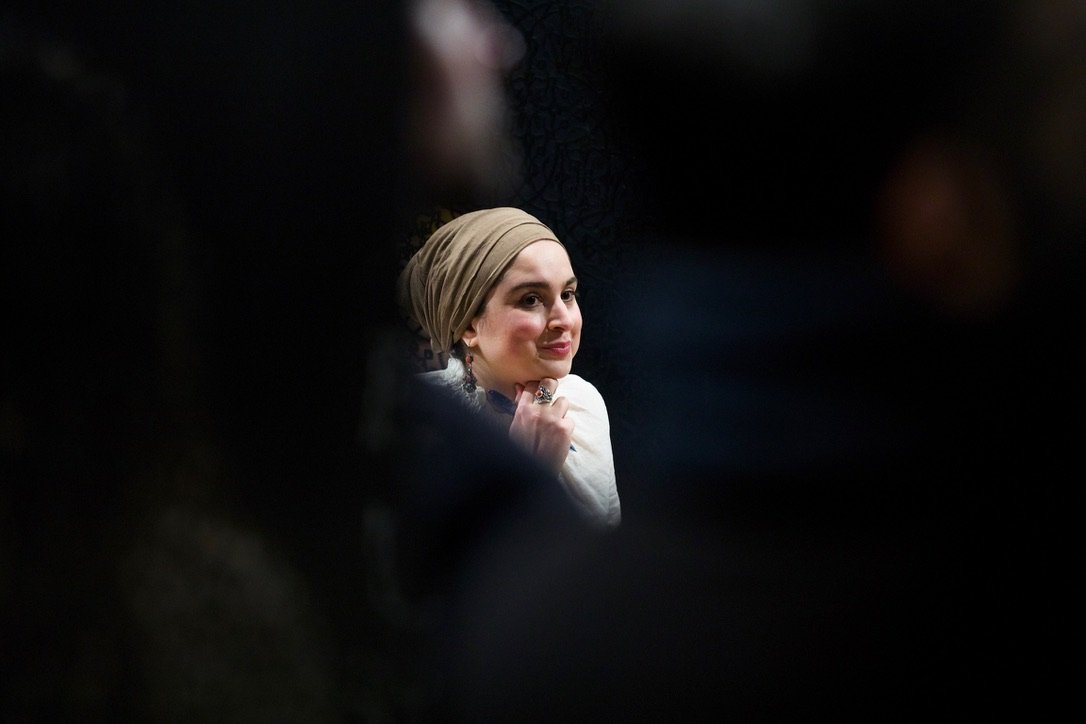
Photo credit: Talha Tabish
Barâa Arar is a writer and editor based in Toronto. Her poetry and prose has appeared in The Markaz Review, Room, Rowayat, The Ex-Puritan, and the anthology Muslim American Writers at Home. She is currently working on her debut novel thanks to grants from the Canada Council for the Arts and the Toronto Arts Council. You can find her at Baraaarar.com.